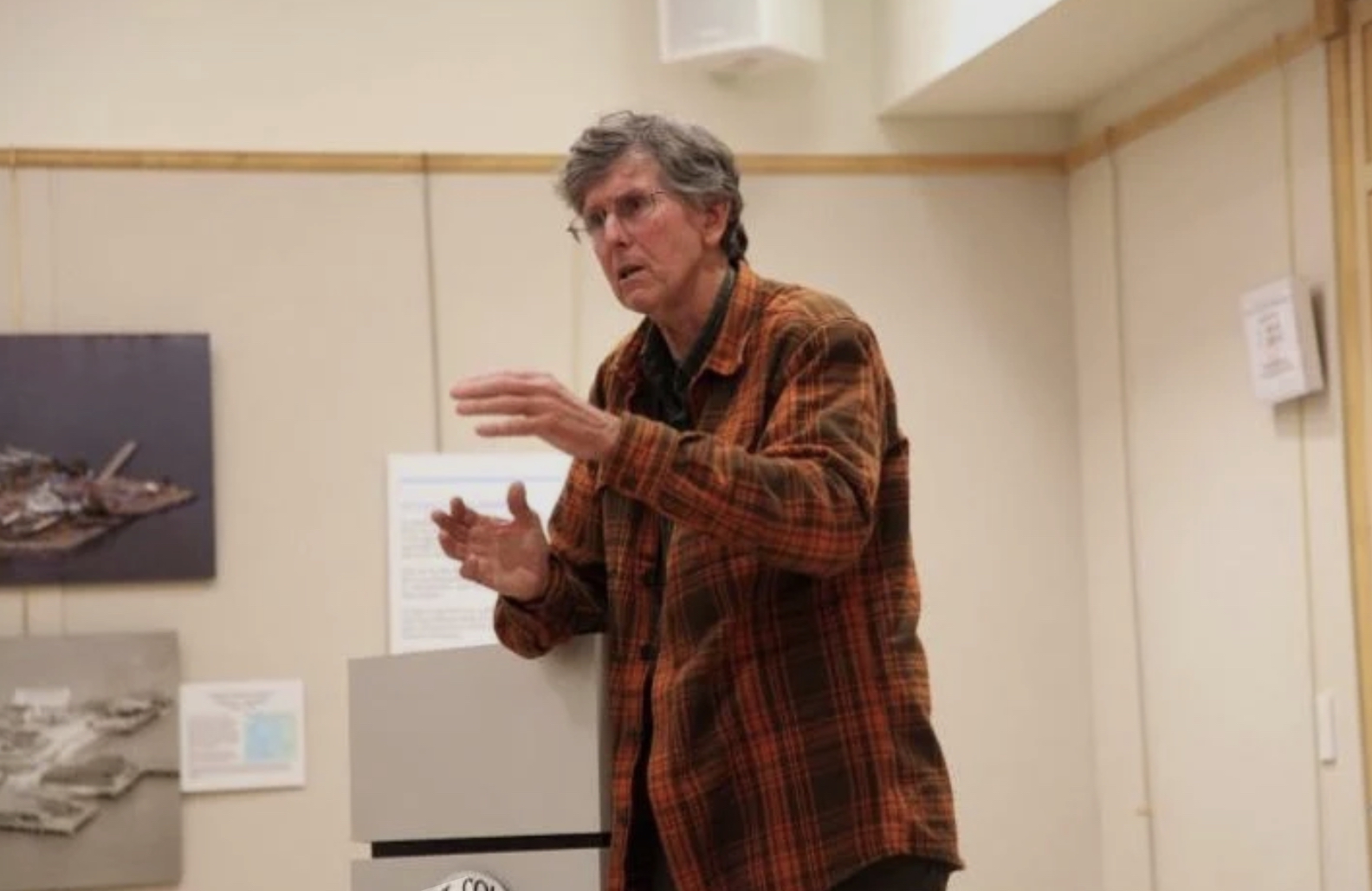
The Caroline County Historical Society will be hosting an event with author/writer Tom Horton to be held at 5 PM on March 3, 2026 at the Museum of Rural Life in Denton, MD. Mr. Horton will be giving a talk about the Choptank River, the largest river on the Eastern Shore of Maryland. This talk will be open to the public. Please join us to come and hear a talk that is sure to be fascinating.
About the Speaker:
Tom Horton was born and raised on the Eastern Shore of Maryland. He grew up hunting, fishing, and consorting with watermen. Mr. Horton reported on the Chesapeake Bay for the Baltimore Sun for fifteen years before becoming a freelance writer in 1987. In 1987, Horton moved his family to Smith Island in Chesapeake Bay for a two-year stay. During that time, he was deeply affected by the local populace, whose traditional way of life is becoming difficult to maintain. He has written numerous books on the Chesapeake Bay and the Eastern Shore. He is the author of: Bay Country (1987); Swanfall: Journey of the Tundra Swan (1991); Co-author of Turning the Tide: Saving The Chesapeake Bay (1991); Water’s Way: Life Along the Chesapeake (1992); An Island Out of Time: A Memoir of Smith Island in the Chesapeake (1996); The Great Marsh: An Intimate Journey into a Chesapeake Wetland (2002); Turning the Tide: Saving The Chesapeake Bay (Revised and Expanded Edition 2003); and The Nanticoke: Portrait of a Chesapeake River (2008). Hi was also the writer for several films produced by the Environmental Film Festival in the Nations Capital (DCEFF) (dceff.org): Beautiful Swimmers Revisited (2016); High Tide in Dorchester (2017); An Island Out of Time (2018); Nassawango Legacy (2019); Water’s Way: Thinking Like A Watershed (2021); and A Passion for Oysters (2025). He has written for magazines including National Geographic, Rolling Stone, The New York Times and the Boston Globe. He teaches writing and environmental studies at Salisbury University, and also worked for five years as an educator at the Chesapeake Bay Foundation. He contributes regularly to Chesapeake Bay Magazine and the Bay Journal News Service.
Tom Horton was born and raised on the Eastern Shore of Maryland. He grew up hunting, fishing, and consorting with watermen. Mr. Horton reported on the Chesapeake Bay for the Baltimore Sun for fifteen years before becoming a freelance writer in 1987. In 1987, Horton moved his family to Smith Island in Chesapeake Bay for a two-year stay. During that time, he was deeply affected by the local populace, whose traditional way of life is becoming difficult to maintain. He has written numerous books on the Chesapeake Bay and the Eastern Shore. He is the author of: Bay Country (1987); Swanfall: Journey of the Tundra Swan (1991); Co-author of Turning the Tide: Saving The Chesapeake Bay (1991); Water’s Way: Life Along the Chesapeake (1992); An Island Out of Time: A Memoir of Smith Island in the Chesapeake (1996); The Great Marsh: An Intimate Journey into a Chesapeake Wetland (2002); Turning the Tide: Saving The Chesapeake Bay (Revised and Expanded Edition 2003); and The Nanticoke: Portrait of a Chesapeake River (2008). Hi was also the writer for several films produced by the Environmental Film Festival in the Nations Capital (DCEFF) (dceff.org): Beautiful Swimmers Revisited (2016); High Tide in Dorchester (2017); An Island Out of Time (2018); Nassawango Legacy (2019); Water’s Way: Thinking Like A Watershed (2021); and A Passion for Oysters (2025). He has written for magazines including National Geographic, Rolling Stone, The New York Times and the Boston Globe. He teaches writing and environmental studies at Salisbury University, and also worked for five years as an educator at the Chesapeake Bay Foundation. He contributes regularly to Chesapeake Bay Magazine and the Bay Journal News Service.
Mr. Horton has won numerous local and national awards, including the National Wildlife Federation’s Conservation Communicator of the Year, the Scripps-Howard Meeman award for best conservation series (on the Amazon jungle), and the Kenny Rogers national award for hunger reporting (on the Ethiopian famine.) His book Bay Country, a series of essays on the Chesapeake environment, won both the John Burroughs Medal for the country’s best natural history book of 1988 and a similar award from the Wildlife Society.